Symposium in Kaunas, Lithuania: 19–21 April 2027
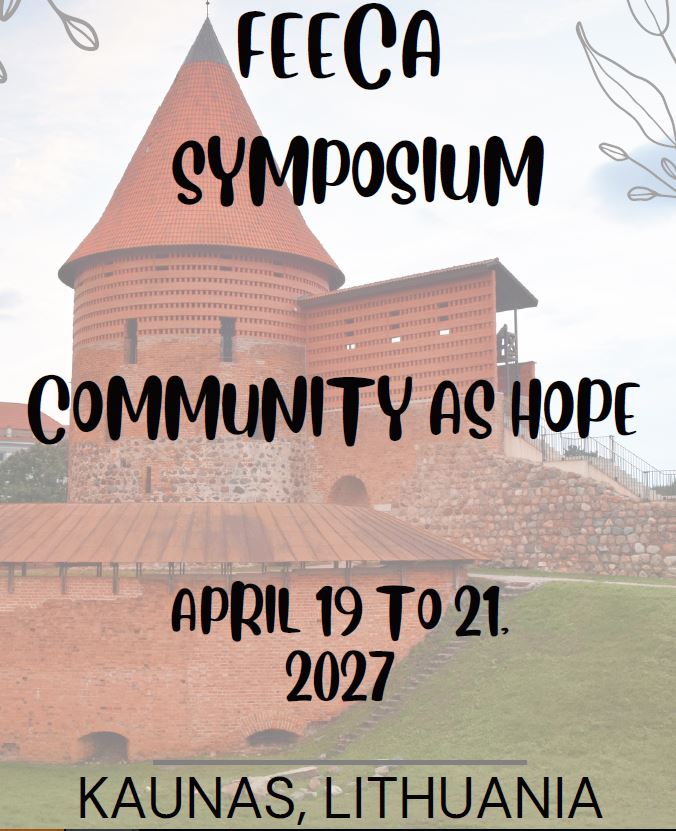 Next April, FEECA invites you to a symposium in Kaunas, Lithuania, on the theme “Community as hope”.
In today’s world, Catholic communities face three interconnected challenges: the erosion of democracy and increasing political polarisation, questions about the future of the Church and the Christian faith, and the weakening of social bonds. Catholic adult education is not merely about imparting knowledge—it is a response to these challenges by promoting values, strengthening civic responsibility and preserving hope.
The Christian tradition teaches us that people grow and mature through community. Therefore, the question “How can we keep from losing hope?” is not merely a personal one—it is a communal, political and educational question.
Registration is possible via this link until 31 December 2026.
Cancellation is free of charge until 12 February 2027.
We would be delighted if as many colleagues as possible could participate in the symposium and take this opportunity to get to know FEECA.
Further information is available here.
The invitation may be shared with interested colleagues in Catholic adult education.
Greetings from Europe
Short online events for adult educaters from Europe
“Greetings from Europe” is a new online event series where adult educators from all FEECA organizations meet online for an hour at lunchtime to better connect with each other. There’s always a focus topic, and we invite a speaker who provides us with relevant information for our work practice and whom we can ask questions directly. Of course, exchanging ideas with each other is equally important. All full-time and volunteer staff involved in adult education in FEECA member organizations are invited. The event is conducted in English and no prior knowledge is required.
The event is free, but registration is open until 7 days before each event here.
The first two events are about the European funding program Erasmus + Adult Education and the European Adult Education Platform EPALE. You can register for both events or just for one, depending on your interest. If this format is well received, we will continue it in 2027. We already have some topic ideas for that, but we are also open to suggestions.
12. November 2026, 12:00-13:00 CET: „Erasmus Adult Education“
Referentin Anke Dreesbach, National Agency Germany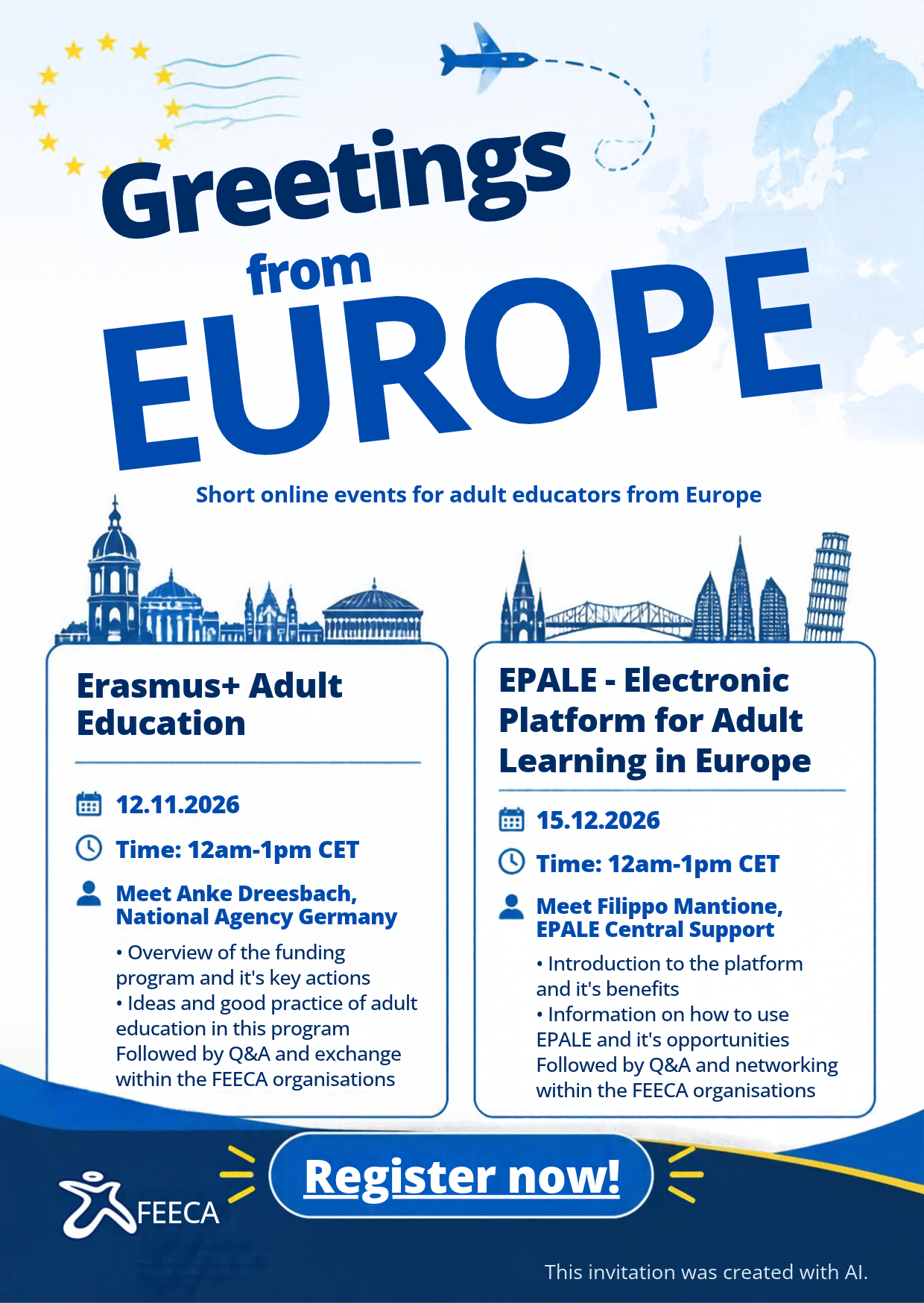
- Overview of the funding program ans its key actions
- Ideas and good practice of adult education in this program
Followed bei Q&A and exchange within the FEECA organisations
15. Dezember 2026, 12:00-13:00 CET: „EPALE – Electronic Platform for Adult Learning in Europe“
Referent Filippo Mantione, EPALE Central Support
- Introduction to the platform and its benefits
- Information on how to use EPALE and its opportunities
Followed bei Q&A and networking within th FEECA organisations.
New FEECA Executive Board
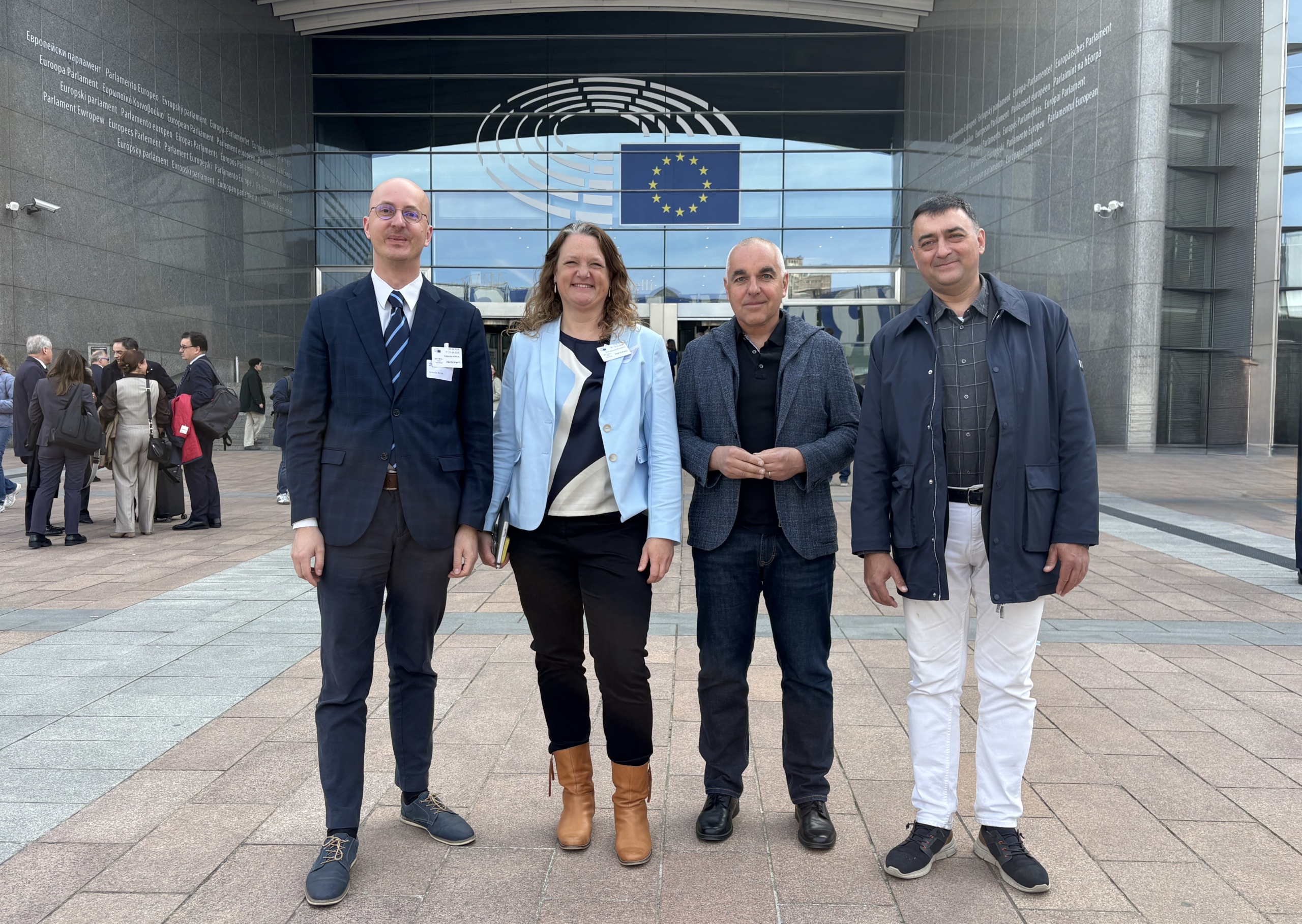
From left to right: Vytautas Kirka, Lea Sedlmayr, Bernd Wachter, Sándor Szakács. Photo: Christina Dobbehaus
During the recent General Assembly held in Brussels, Hubert Petrasch, Chair of the Forum Katholischer Erwachsenenbildung in Austria, handed over the presidency to Lea Sedlmayr, Managing Director of Catholic Adult Education in Germany.
Since 2022, Petrasch had served as President of FEECA and played a significant role in shaping the development of the European network during his term.
Alongside Lea Sedlmayr, Bernd Wachter (Austria) and Vytautas Kirka (Lithuania) were elected Vice-Presidents to the Executive Board. Dr. Ferenc Sándor Szakács (Hungary) will continue to serve as Vice-President.
FEECA-Symposium 2025 in Zurich
The ‘Ecumenism in adult education’ conference took place in Zurich from 2 to 4 April 2025. The event was attended by 28 experts from eight European countries – half of whom came from Central and Eastern Europe. After a welcome address by FEECA President Hubert Petrasch, Csongor Kozma, Director of the host Paulus Academy, introduced the organisation.
Prof. Dr Nicola Ottiger from the Ecumenical Institute Lucerne kicked off the following main day with a groundbreaking lecture on the foundations of ecumenical commitment. Starting with a historical review, she emphasised in particular the importanc 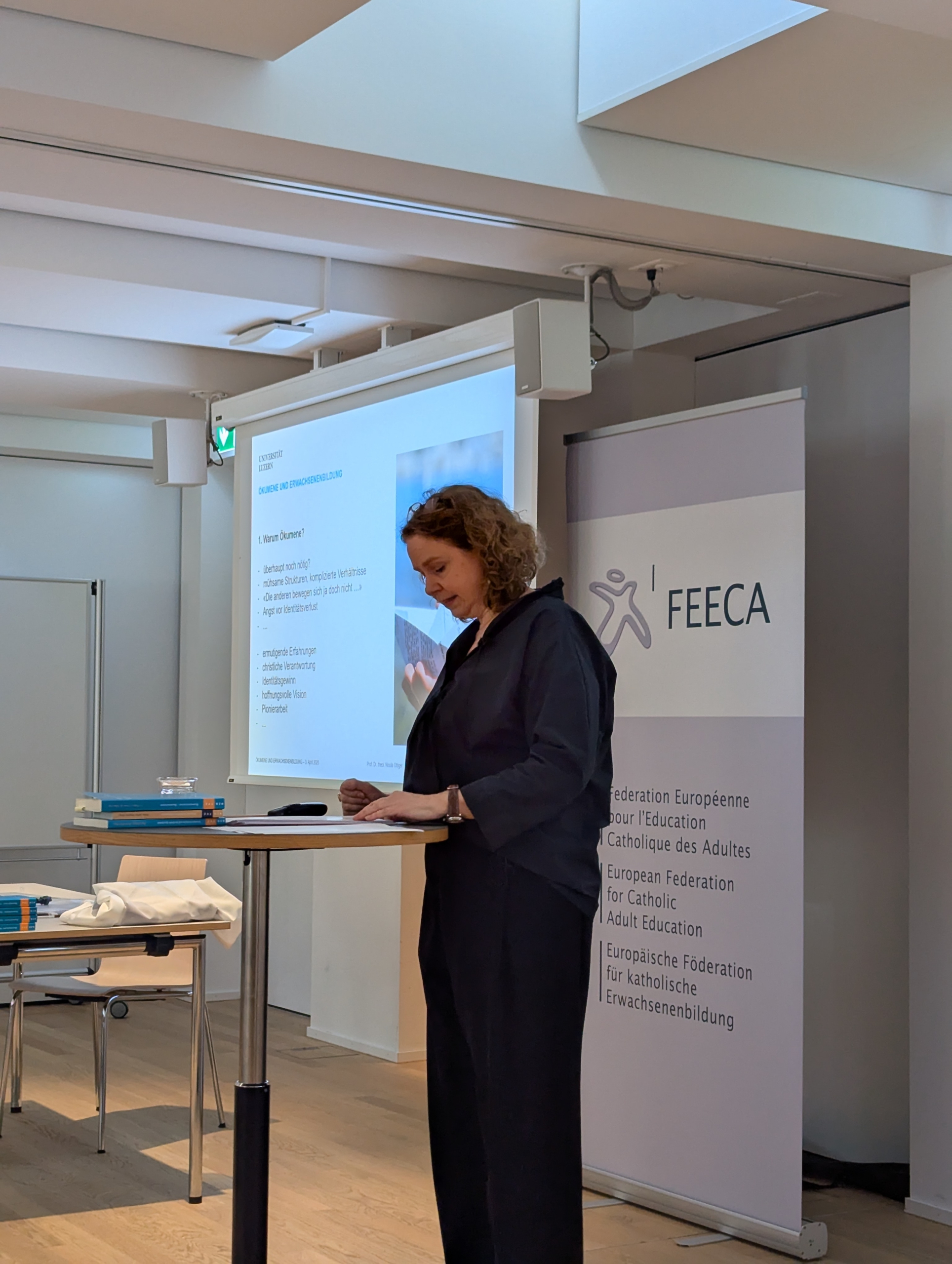 e of the Charta Oecumenica with its central leitmotifs: ‘Together towards unity in faith’, ‘Towards one another’ and ‘Acting together’. She emphasised the unifying power of faith, which in her view outweighs existing differences and creates a common basis for ecumenical action.
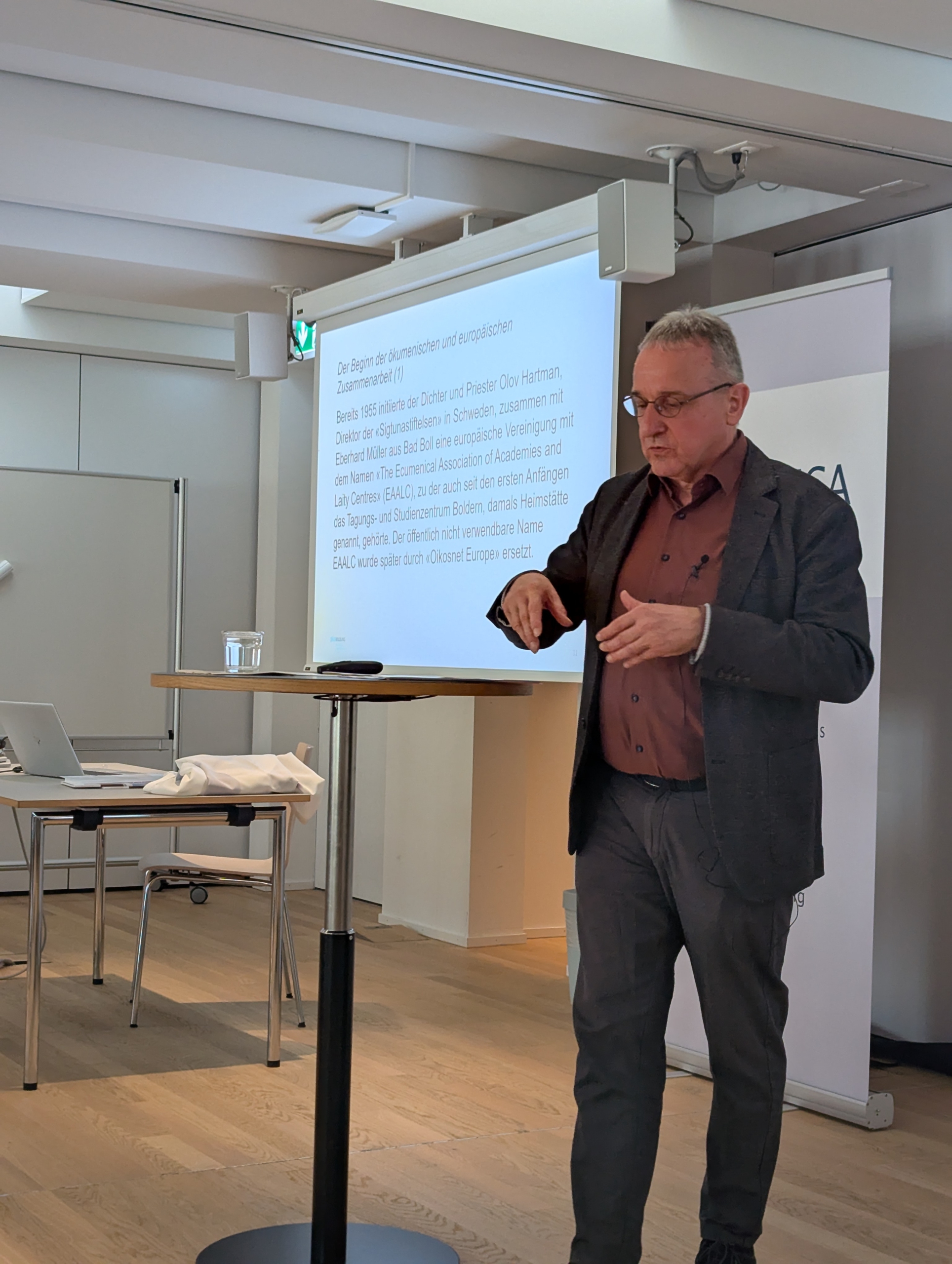 Walter Lüssi, President of Plusbildung and Oikosnet Europe, then spoke about his practical experience with ecumenical cooperation. Using the example of Plusbildung – the network for non-formal church education in Switzerland – he showed how a strong association with over 40 member organisations has developed from an idea in ten years. His conclusion: co-operation is the norm, going it alone is the exception.
Pastor Líviu Jitianu contributed further perspectives and described his ecumenical experiences with Catholic parishes in Zurich and in the Romanian diocese of Alba Julia. For him, ecumenism means peaceful coexistence with many facets, which should lead to a shared sense of mission and encourage reflection on the common mission.
Martin Werlen opened the last day of the symposium with an impulse on change, growth and hope. The Swiss Benedictine monk and former abbot of Einsiedeln presented his book “Baustellen der Hoffnung. An encouragement to tackle life”, in which he compares life itself to a building site: It is loud, disruptive and demanding, but at the same time necessary for development and change. Using the extensive renovation work at St Gerold’s provostry as an example, he showed how one can learn to deal with building sites – also in a figurative sense – lovingly and constructively. Werlen sees the church as a living community in flux – ecumenism is another such ‘building site’ that needs cooperation and diversity. Werlen spoke out against denominational demarcations and emphasised the importance of common rituals such as meal times. Good education, he concluded, prepares people for these challenges and supports the path to an open church that is ready to learn.
Catholic Adult Education Mourns the Loss of Dr. Erika Schuster
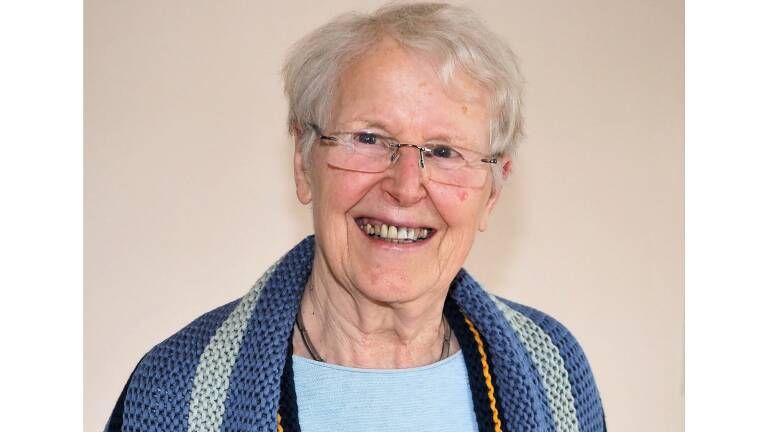
Photo: Martin Kalchhauser, NÖN
Through her work, she significantly shaped Catholic adult education — as Director of the Literary Forum Vienna from 1985 to 2000, where she initiated the distance-learning literature course for the entire German-speaking region; as President of the European Federation of Catholic Adult Education from 2002 to 2012; as an editor and journalist; and, more broadly, as a deeply committed and inspiring individual.
Following her studies in German, philology and history, and the completion of her doctoral dissertation in 1964, Erika Schuster began her professional career as a teacher at what is now the Mary Ward Gymnasium, where the Krems-born educator, born in 1940, taught for 22 years.
From 1970 onward, she devoted herself increasingly to adult education and maintained international contacts with friends and colleagues in the field throughout her life.
In recognition of her outstanding achievements, Erika Schuster received the Adult Education Appreciation Award of the State of Lower Austria in 2000. In 2012, she was awarded the Papal Order of Saint Sylvester, presented by Christoph Schönborn.
Her legacy will continue to inspire Catholic adult education in Europe.
FEECA Symposium 2025
From 2 to 4 April 2025, the FEECA Symposium on the theme Ecumenism in Adult Education will take place in Zurich.
The invitation and programme can be found here.
Registration is now open via this link: https://eveeno.com/feeca-symposium.
60 Years of FEECA: The European Federation for Catholic Adult Education Celebrates Its Anniversary
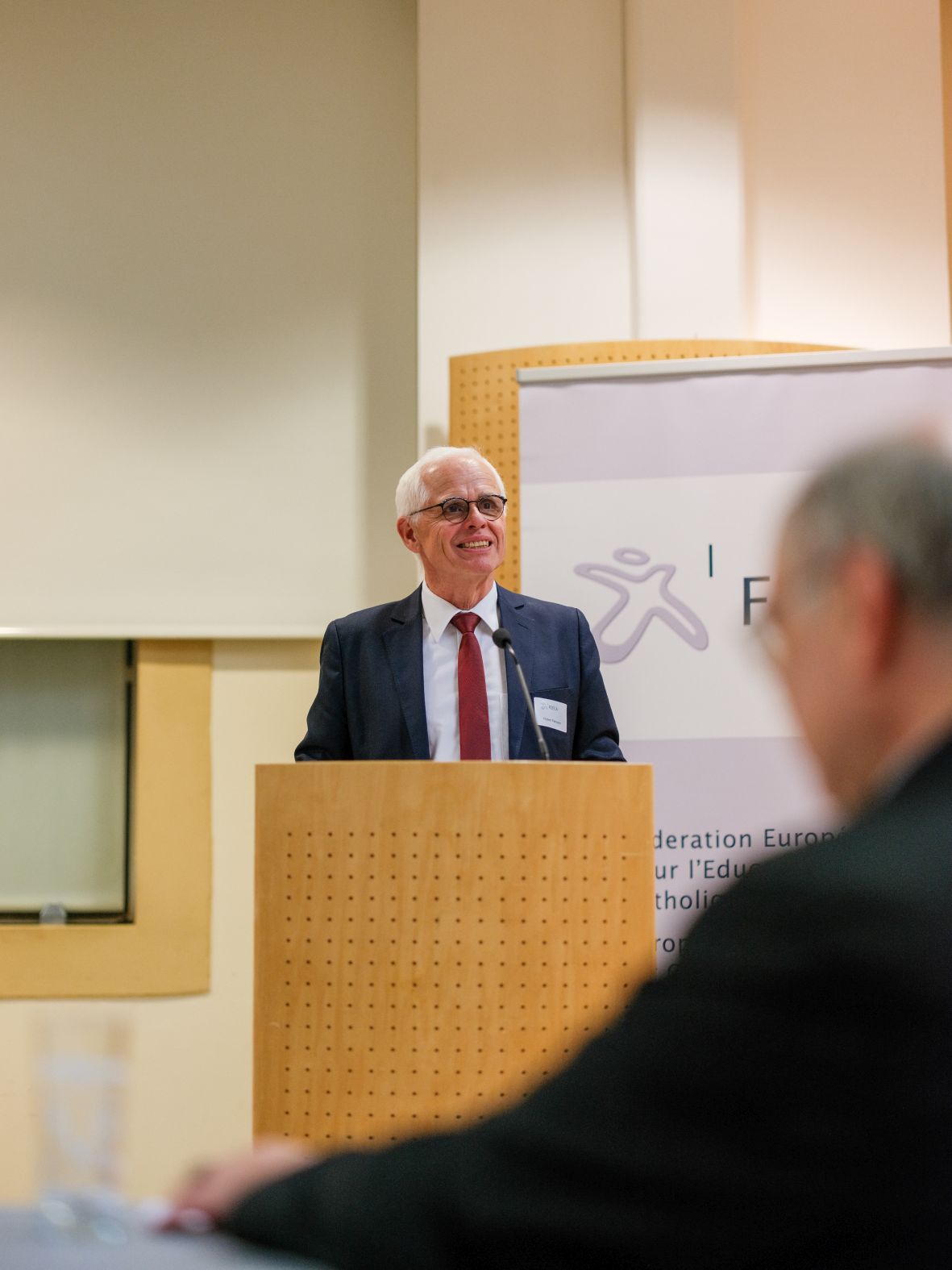
Hubert Petrasch, Photo: Peter Rinnerthaler
“The European Federation for Catholic Adult Education (FEECA) is turning 60,” said FEECA President Hubert Petrasch during a celebratory event held in Vienna on 23 October. A small circle of invited guests gathered at Stephansplatz in the heart of Vienna to celebrate the federation’s anniversary together with the Austrian hosts.
Distinguished Guests from Education and Religion Mark the Anniversary
Among the prominent guests offering congratulations were Auxiliary Bishop Stephan Turnovszky, representing Cardinal Christoph Schönborn; Wilhelm Krautwaschl, the Austrian Bishops’ Conference representative for adult education; Othmar Karas, First Vice-President of the European Parliament; and former FEECA President Alois Becker as guest of honour.
In his address, Hubert Petrasch spoke of a “united Europe.” He pointed to European programmes such as Erasmus+, in which all member states of the European Union can participate on equal terms. At the same time, he noted that adult education across Europe is often viewed primarily through the lens of labour market needs and professional qualification, an area in which Catholic adult education organisations tend to be less engaged.
Petrasch stressed that adult education must not be reduced to economic utility alone. Referring to the devastating images and news from the war zones in Israel and Palestine, he underlined how important mindfulness, empathy and social understanding are within education today.
60 Years of Commitment to Church-Based Adult Education
In his remarks, Bishop Krautwaschl paid tribute to “60 years of commitment to church-based adult education.” At the same time, he highlighted the many challenges facing Europe today: the climate crisis, migration, the war in Ukraine, the rise of nationalism, economic difficulties following the pandemic and the war, as well as the Church’s ongoing transformation process in the wake of abuse scandals, declining membership, financial pressures and growing internal polarisation.
Auxiliary Bishop Turnovszky emphasized that educational work — including Catholic adult education — remains a core mission of the Church.
What distinguishes Catholic adult education, he said, is its Christian understanding of the world and the human person. At its centre is the individual in their uniqueness, yet always in relationship: to oneself, to others and to God. These relationships, he noted, define the particular quality and social relevance of Catholic adult education.
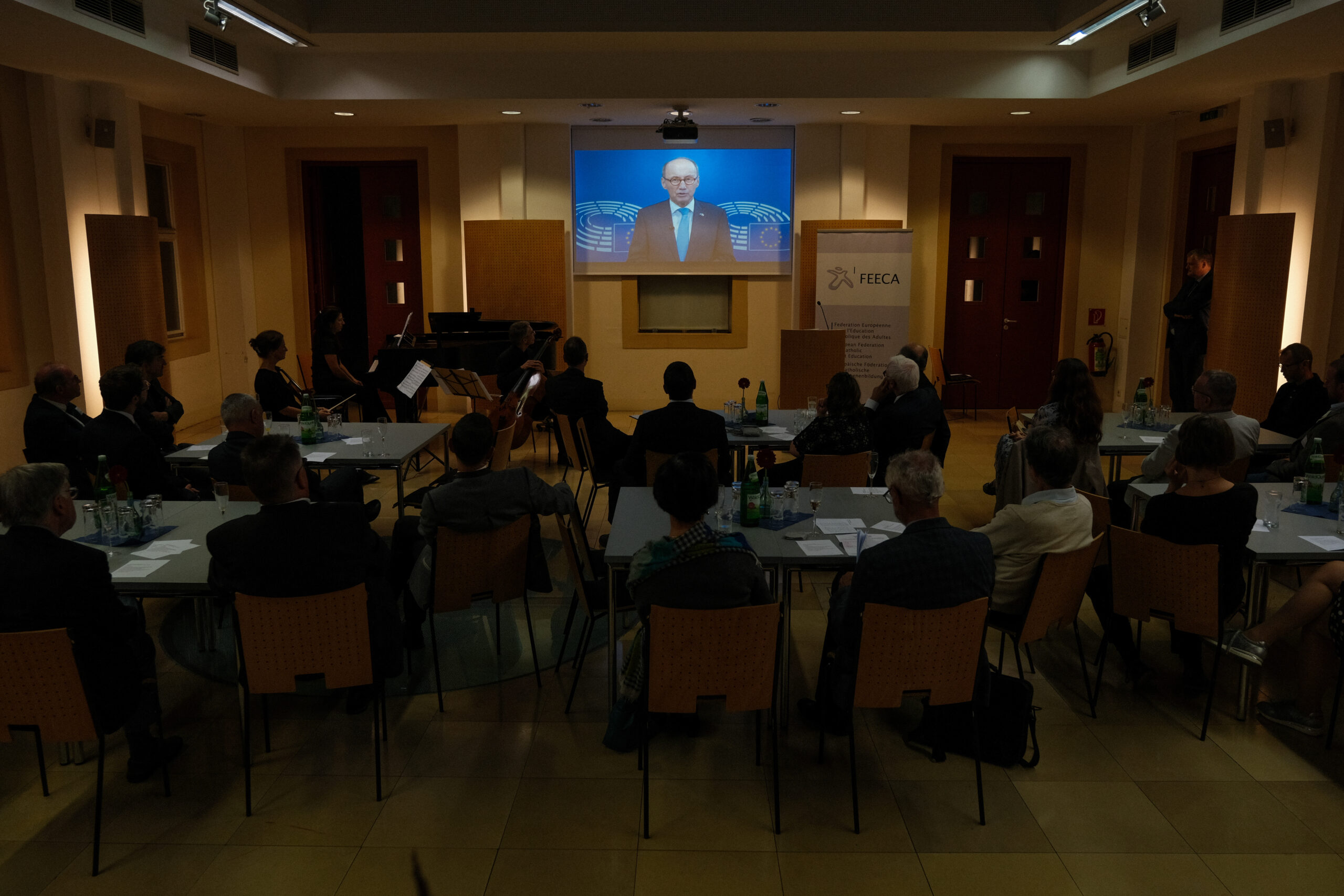
Othmar Karas, Photo: Peter Rinnerthaler
In a video message, Othmar Karas sent “warm greetings from Brussels” and congratulations on “60 years as the European umbrella organisation for Catholic adult education.”
He described the anniversary as representing not only a long history but also a sustained commitment to education within the European community. Education, he stressed, makes an invaluable contribution to a united Europe, particularly through promoting fundamental values such as respect, tolerance, solidarity and social responsibility. Dialogue, he added, is essential for the continued development and deepening of the European Union.
Concluding his message, Karas — describing himself as a “committed Christian, convinced Austrian and open-minded European” — recalled that Christianity and Europe are inseparably linked and wished FEECA many more successful years of education, dialogue and commitment to a united Europe.
Catholic Adult Education as a Force in Society
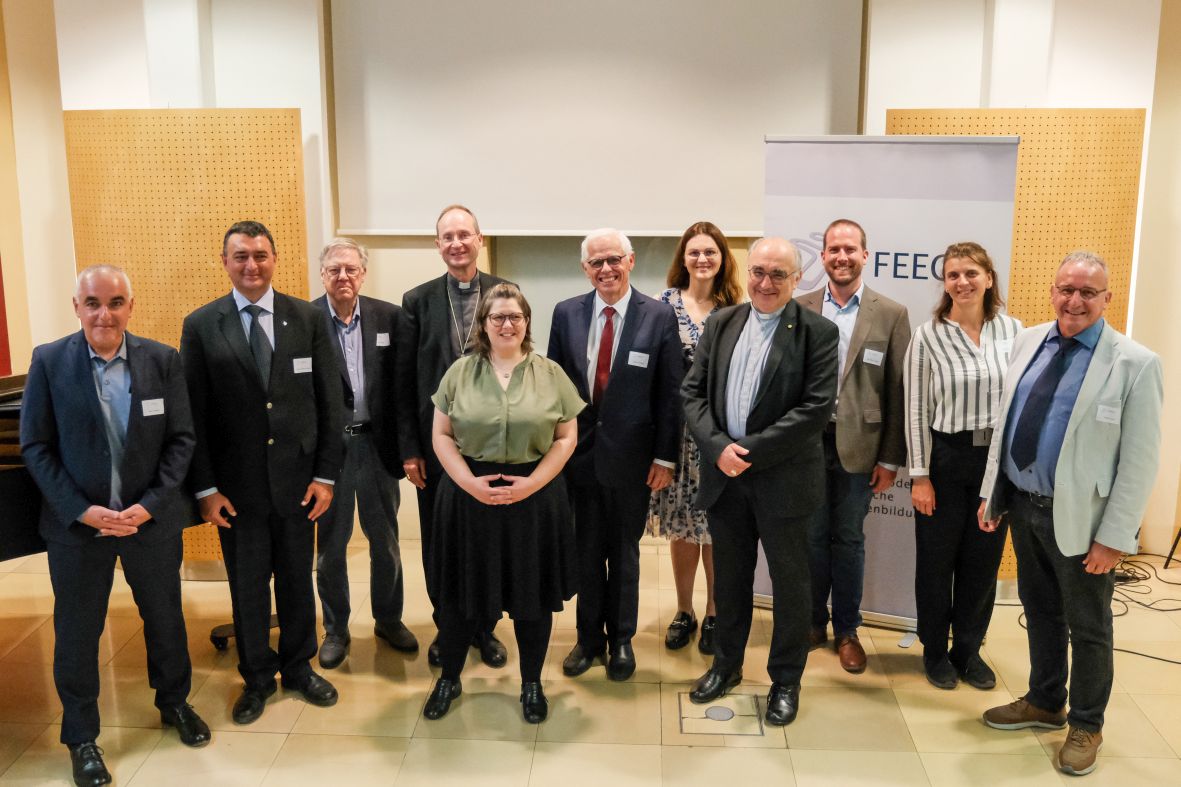 Die FEECA ist im gesamteuropäischen Raum aktiv, wobei Österreich seit Jahren eine wichtige Stellung einnimmt und nach Erika Schuster und Karl Kalcsics mit Hubert Petrasch derzeit bereits zum dritten Mal die Präsidentschaft innehat.
FEECA is active across Europe, with Austria playing an important role for many years. Following Erika Schuster and Karl Kalcsics, Hubert Petrasch currently serves as the third Austrian president of the federation.
In many German-speaking countries, including Austria, Catholic adult education has traditionally played an important role. Its priorities respond to contemporary social questions and needs.
“As those engaged in Catholic adult education, we fundamentally agree that Catholic adult education should have an impact on society,” Petrasch stated.
For common action at the European level, he sees a clear need for exchange and joint reflection on the work of Catholic adult education. For this purpose, FEECA provides an ideal organisational framework.
FEECA Symposium in Cluj-Napoca
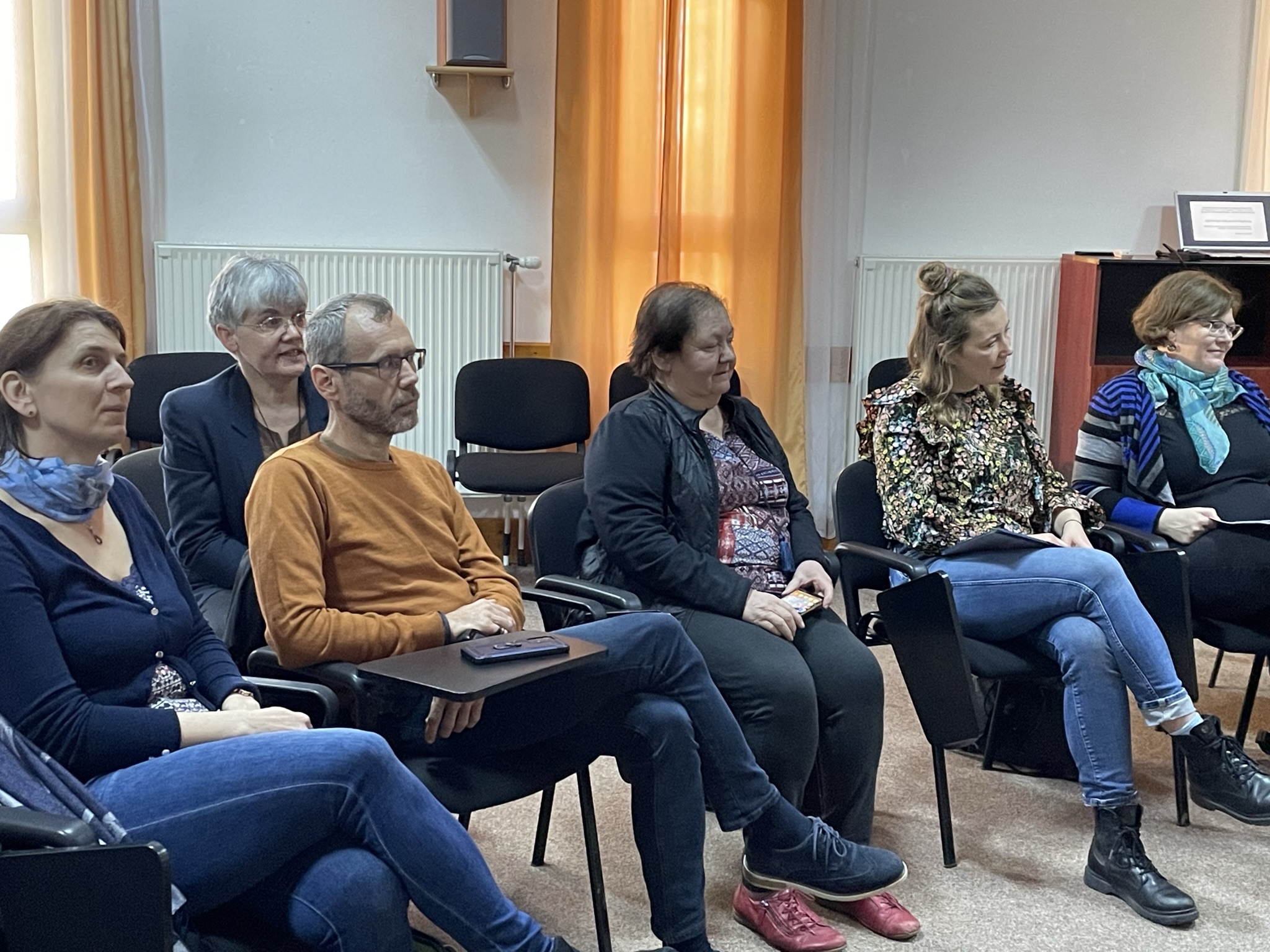 From 17 to 19 April 2023, colleagues from four member countries gathered in Cluj-Napoca for this year’s symposium of the FEECA. The conference focused on the overarching theme Hope through Faith, Overcoming Fear through Education.
A foundational introduction to the topic was provided by János Vik, professor and long-serving dean at the Catholic Theological Faculty of Babeș-Bolyai University and researcher at the South German Institute for Logotherapy and Existential Analysis.
Drawing on the approach of Viktor Frankl, Prof. Vik highlighted a perspective that places particular emphasis on the spiritual dimension of the human person and understands the search for meaning in life as a primary motivational force. This approach, he explained, is highly relevant for pastoral work and compatible with the Christian understanding of the human person. For many years, pastoral workers in his diocese have therefore been trained as pastoral companions based on logotherapy and support people professionally in dealing with anxiety.
Practical educational examples were presented by Boglárka Péter, Managing Director of the Pro Educatione Network in Romania.
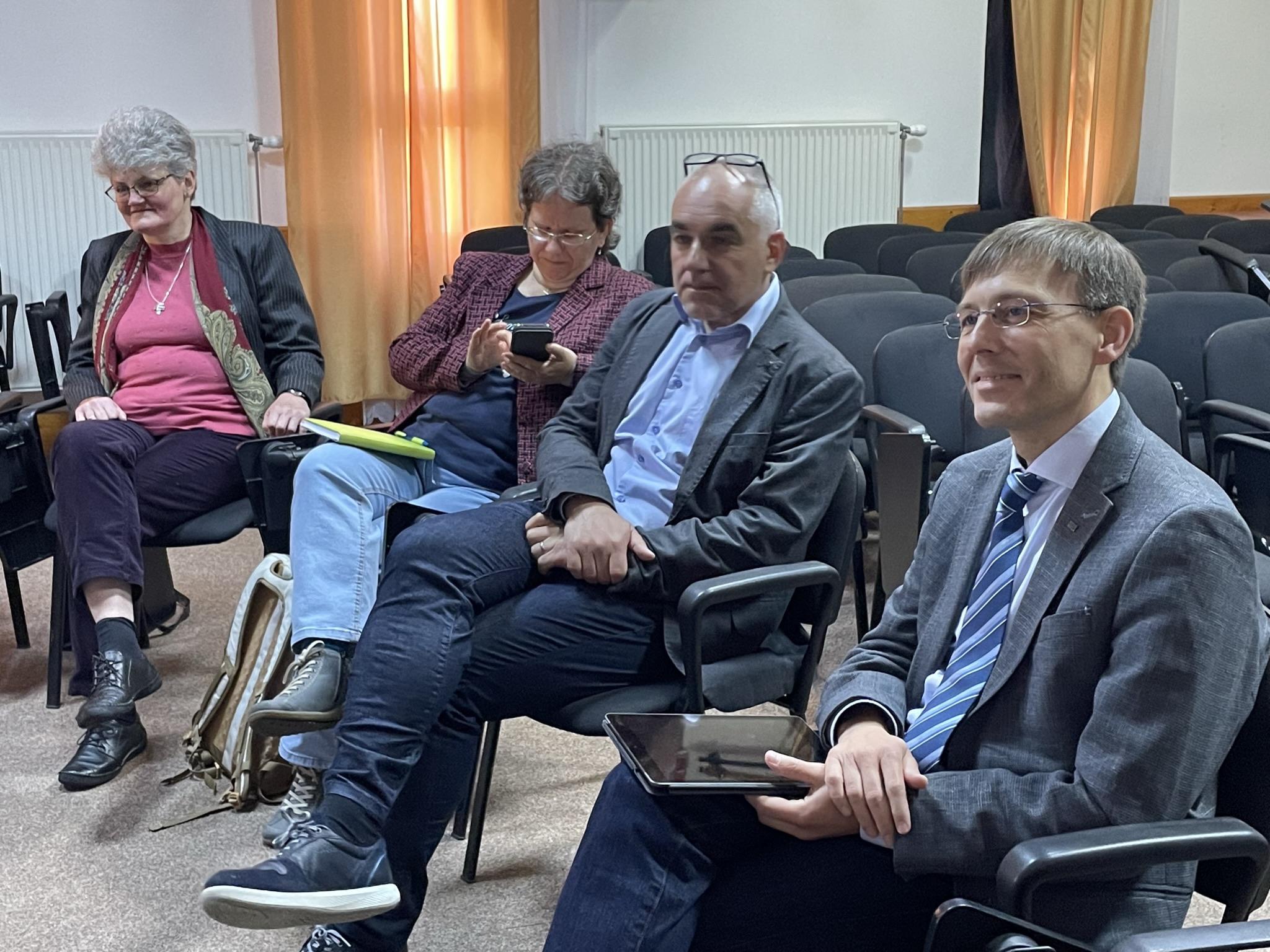 Initiatives aimed at overcoming fear through family programmes were introduced by Bernadett Török, who leads the Office for Family Pastoral Care in the Archdiocese of Alba Iulia, which includes Cluj-Napoca. A further presentation by Bodo Marta on a wide range of Catholic media initiatives rounded off the impressive work of the Romanian colleagues.
Weiters konnten wir ein sehr interessantes Wohnprojekt der Kongregation der Helferinnen für Jugendliche in Cluj kennenlernen. Dr.in Silvia Bereczik SA und Magdolna Tomka SA, beide von der Kongregation der Helferinnen, gestalteten auch einen spirituellen und sehr in die persönliche Tiefe gehenden Tagungsabschluss. Einen ganz herzlichen Dank den rumänischen Kolleg/innen für Organisation dieser großartigen Tagung.
Participants also had the opportunity to learn about an inspiring residential project run by the Congregation of the Helpers for Youth in Cluj. Silvia Bereczik and Magdolna Tomka, both from the congregation, also led a spiritual and deeply reflective conclusion to the symposium.
Warm thanks go to the Romanian colleagues for organising this outstanding conference.
A greeting message from Hungarian Member of the European Parliament György Hölvényi was also made available to the symposium and can be read here.
Hubert Petrasch Elected New President of FEECA
At this year’s General Assembly of the FEECA, Hubert Petrasch was elected as the new President.
Petrasch, a theologian and educator, serves as Managing Director of the Office for Adult Education in the Archdiocese of Vienna and as Deputy Chair of Catholic Adult Education in Austria.
Following his election, Petrasch expressed his anticipation of working closely with the member organisations while also emphasizing the major challenges currently facing adult education across Europe:
“The COVID-19 pandemic and the sharp rise in costs caused by the energy crisis make it difficult for adult education to fulfil its mission. All the more important, therefore, is that Catholic adult education, through its programmes, offers people hope.”
Hubert Petrasch succeeds Alois Becker, who did not stand for re-election after serving several terms.
Ferenc Sándor Szakács and Andrea Heim were elected as Vice-Presidents and will complete the Executive Board.
Leadership Change in the Forum for Catholic Adult Education in Austria
On 1 October 2020, Bernd Wachter assumed the role of Federal Managing Director of the Forum for Catholic Adult Education in Austria, succeeding Ernst Sandriesser, who had served in the role since 2018.
Further information is available here: Link
The Role and Cooperation of Church Educational Institutions in Shaping Romanian Society
The symposium of the FEECA, organised in cooperation with Renovabis, will take place in Cluj-Napoca from 27 to 28 April 2020.
The programme can be found here: Programme FEECA Symposium 2020

